
What this test checks:
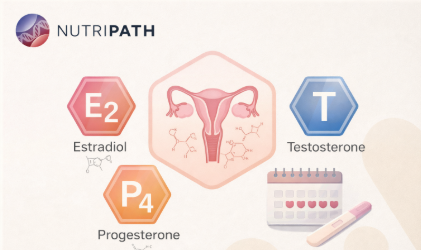
1) Sex hormones and how your body breaks them down
Measures oestrogen and progesterone hormones (and related hormones) and their breakdown products. This can show whether your body is clearing hormones through “safer” or “more irritating” pathways, which may matter for PMS/PMDD, heavy or irregular periods, perimenopause/menopause symptoms, breast tenderness, mood changes, and skin changes.
Includes:
Oestrogens: estrone (E1), estradiol (E2), estriol (E3)
Oestrogen metabolism: 2-OH, 4-OH, and 16-OH pathways + “methylated” forms (MeO)
Progesterone pathways: pregnanediol and related progesterone metabolites
Androgens (“testosterone-type” hormones): testosterone, DHEA, androstenedione, DHT-related markers, and related metabolites
2) Stress/adrenal rhythm (cortisol patterns across the day)
Looks at cortisol and cortisone (including a day pattern: morning/midday/afternoon/evening) and how your body converts and clears them. This helps assess stress load, energy patterns, and recovery.
Includes:
Free cortisol and free cortisone at multiple times of day
Total cortisol/cortisone + cortisol:cortisone ratio
Cortisol breakdown markers (tetrahydro metabolites) and other adrenal hormones
3) Sleep hormone (melatonin pattern)
Checks melatonin across the day to support conversations about sleep timing, circadian rhythm, and recovery.
4) Oxidative stress / DNA protection
Includes a marker called 8-OHdG, which reflects oxidative stress (how much “wear and tear” from oxidation the body is dealing with).
5) Nutrient & metabolism pathway clues (organic acid markers)
Measures a set of markers that can point to B-vitamin needs, amino acid metabolism, and how certain pathways are functioning (often used alongside symptoms rather than as stand-alone diagnoses).
Examples include:
Methylmalonate (often linked with B12 status)
Pyroglutamate (glutathione pathway support)
Kynurenate / quinolinate / xanthurenate (tryptophan pathway markers)
β-hydroxyisovalerate (a marker sometimes associated with biotin-related metabolism)
6) Gut/yeast-related by-products
Includes markers like indican, which can reflect gut bacterial activity and digestion patterns.
7) Environmental chemicals & heavy metals
Screens for exposure to selected heavy metals and common environmental chemicals (endocrine-disrupting compounds).
Includes:
Heavy metals: aluminium, arsenic, cadmium, lead, mercury, nickel, hexavalent chromium
Plastics/chemicals: BPA
PFAS (“forever chemicals”): PFOS, PFOA (and PFAS total)